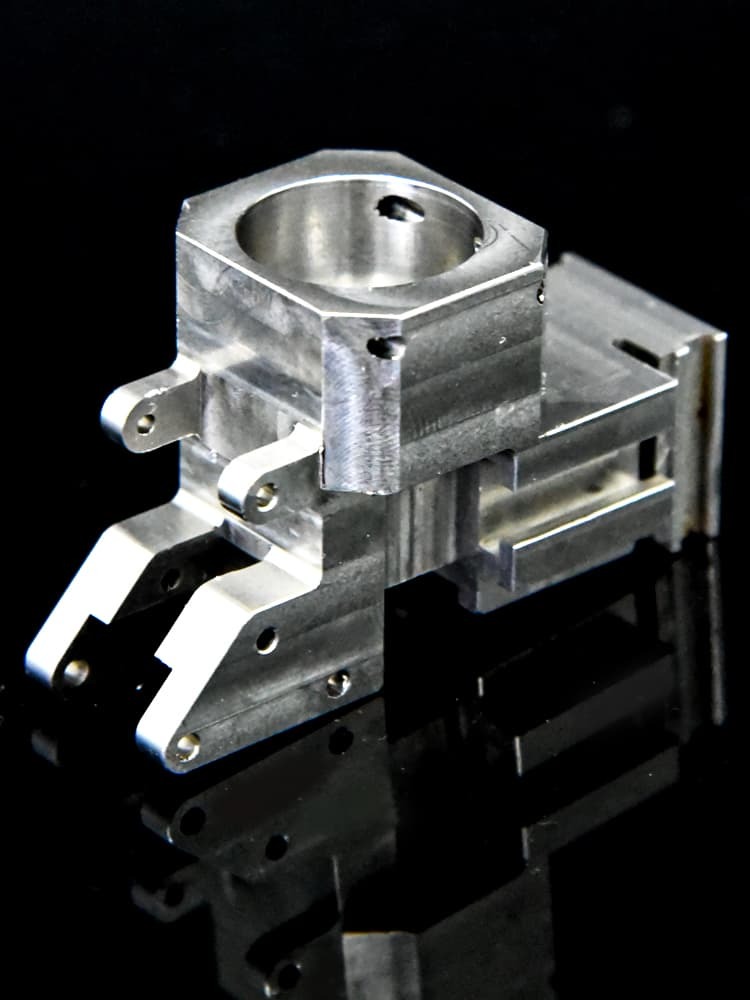
Verifying Connector Alignment Using Precision CNC Machining
Introduction: Why Must Connector Alignment Be Validated in Prototypes Using Precision CNC Machining?
Connector alignment directly affects signal integrity, assembly quality, and long-term reliability. Rapid prototyping allows for early verification of geometry and assembly paths. Precision CNC machining provides true-to-design benchmarks for connector cutouts, locator posts, and guiding features. Small-batch prototypes from a reliable CNC machining service help teams evaluate alignment consistency and manufacturing robustness before mass production.
Cause #1 — Prototypes Reveal Insertion Offset, Stress Concentration, and Instability Not Predicted by CAD
Machining aluminum parts may lead to micro-deformation at connector openings under force or during assembly, making connector insertion less smooth. Aluminum prototype testing can highlight misaligned contacts, locator drift, and off-angle insertion—issues hard to spot in digital models. The stiffness and creep behavior of different custom metal parts can also impact connector alignment over time and must be validated in real prototypes.
Cause #2 — CNC Prototypes Validate Alignment Baselines, Hole Angles, and Assembly Path Stability
Aluminum CNC machining achieves high-precision shells, reference holes, and guiding slots for connectors. Testing CNC prototypes in assembly uncovers if insertion paths are affected by tolerance stack-up. Custom CNC machining allows production of multiple units to provide statistical data on alignment stability—key to predicting connector performance in mass production.
Strategy #3 — 5-Axis Machining Minimizes Alignment Error by Completing Connector Geometry in One Setup
5-axis CNC machining enables guiding slots, cutout angles, and locator posts to be finished in a single clamping, minimizing reference error. Rapid prototyping offers a preliminary assessment of alignment window; precision CNC machining delivers production-level consistency, ensuring connectors stay stable during multi-directional insertion and repeated cycles.
Strategy #4 — Tight Tolerance Zones Must Be Validated in Small Batches to Prevent Poor Engagement
Tight tolerance areas like locator holes, snap slots, and guiding posts are especially sensitive in connector assembly. Small-batch prototypes from a CNC machining service reveal if minor deviations lead to difficult insertion, incomplete mating, or accelerated wear. The influence of different custom metal parts—aluminum, magnesium, steel—on fit and stability must also be tested before final release.
Conclusion — Connector Alignment Validation Relies on Prototype Accuracy, Assembly Testing, and Multi-Axis Consistency
Comprehensive connector alignment validation combines geometric accuracy, hands-on assembly testing, and precision multi-axis machining. From prototype manufacturing to production launch, only data from real prototype parts and assemblies—not just simulation—can guarantee reliable connector alignment in demanding applications.
READ MORE: