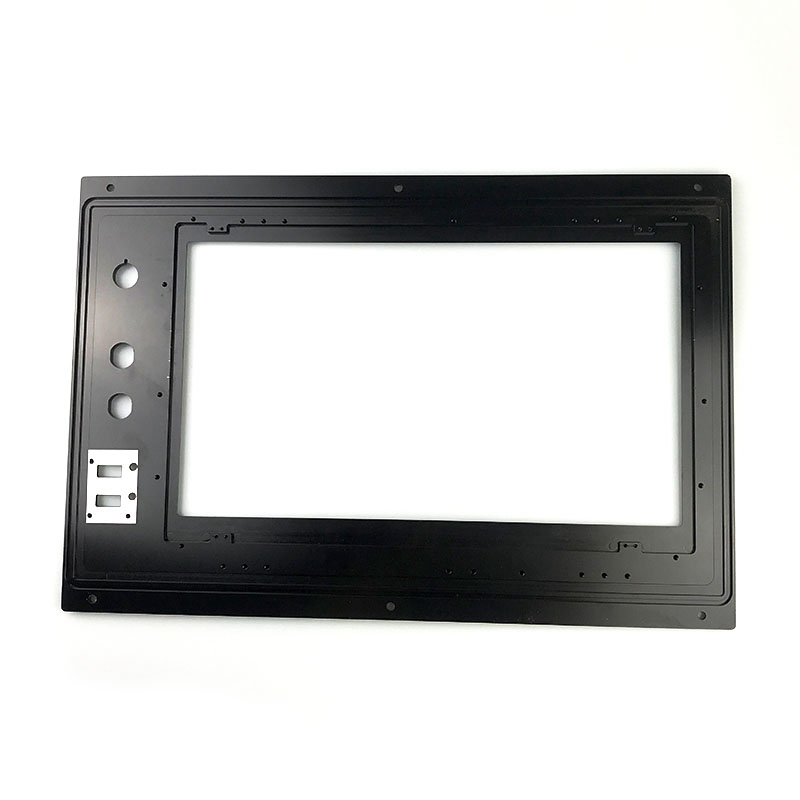
How Rapid Prototyping Reduces Engineering Risk Before Mass Production
Introduction
Before committing to mass production, engineers must identify and mitigate design risks that could lead to failures, delays, or excess cost. Rapid prototyping has become an essential approach for de-risking engineering projects, providing fast, physical feedback on design feasibility, assembly, and function. By utilizing cnc machining service and precision cnc machining, engineering teams can validate their concepts in realistic conditions, ensuring readiness for full-scale manufacturing.
1. Rapid Prototyping Enables Early Testing and Validation
Rapid prototyping allows for quick conversion of CAD models into functional parts. Using a dedicated cnc machining service, teams can produce multiple design versions in a short timeframe, supporting iterative improvement. With precision cnc machining, each prototype meets strict dimensional accuracy, revealing potential weaknesses before costly mass production.
This approach lets engineers conduct fit and assembly tests, uncovering design flaws that may not be visible in digital simulations. Reliable cnc machining service workflows ensure repeatable results for every prototype, enabling rapid progress and early decision-making.
2. Material Flexibility: Aluminum CNC Machining and Custom Metal Parts
Selecting the right materials is a crucial part of risk reduction. Aluminum cnc machining is widely used for rapid prototyping due to aluminum’s machinability, strength, and thermal properties. Engineers can also request custom metal parts from a variety of alloys, evaluating performance under expected load or temperature conditions.
Creating an aluminum prototype allows teams to assess assembly tolerances and check compatibility with other hardware. The ability to order custom metal parts in low quantities ensures that specific engineering needs are addressed before large-scale investment.
When comparing candidate materials, aluminum cnc machining and other custom metal parts make it possible to simulate final production performance during the prototyping phase.
3. Addressing Complexity with 5-Axis CNC Machining
Modern designs often feature complex surfaces and tight geometries. 5-axis cnc machining provides the ability to create intricate shapes in a single setup, supporting efficient rapid prototyping for advanced parts.
The integration of precision cnc machining and 5-axis technology results in highly accurate prototypes that closely replicate final production requirements.
4. Ensuring Tolerance and Functional Requirements
For projects involving machining aluminum parts, maintaining tight tolerance is critical. Precision cnc machining achieves the levels of accuracy needed for functional testing, ensuring that critical features work as intended. By leveraging a professional cnc machining service, teams can avoid downstream assembly or performance issues in mass production.
Machining aluminum parts with precise tolerance confirms that design intent is achieved, while early-stage prototype testing with realistic materials builds confidence in production readiness.
5. Prototype Manufacturing and Iterative Improvement
Prototype manufacturing bridges the gap between concept and volume production. Creating a cnc prototype helps identify design or manufacturing risks and provides tangible evidence for design decisions. Through repeated cycles of custom cnc machining, engineering teams can validate changes and optimize both process and part.
Conclusion
Rapid prototyping is a proven method for reducing engineering risk before mass production. With the support of cnc machining service, precision cnc machining, and capabilities like aluminum cnc machining and 5-axis cnc machining, teams can verify designs under realistic conditions. The use of custom metal parts, tight tolerance practices, and advanced prototype manufacturing processes ensures that all aspects of a design are validated before large-scale manufacturing begins.
READ MORE: