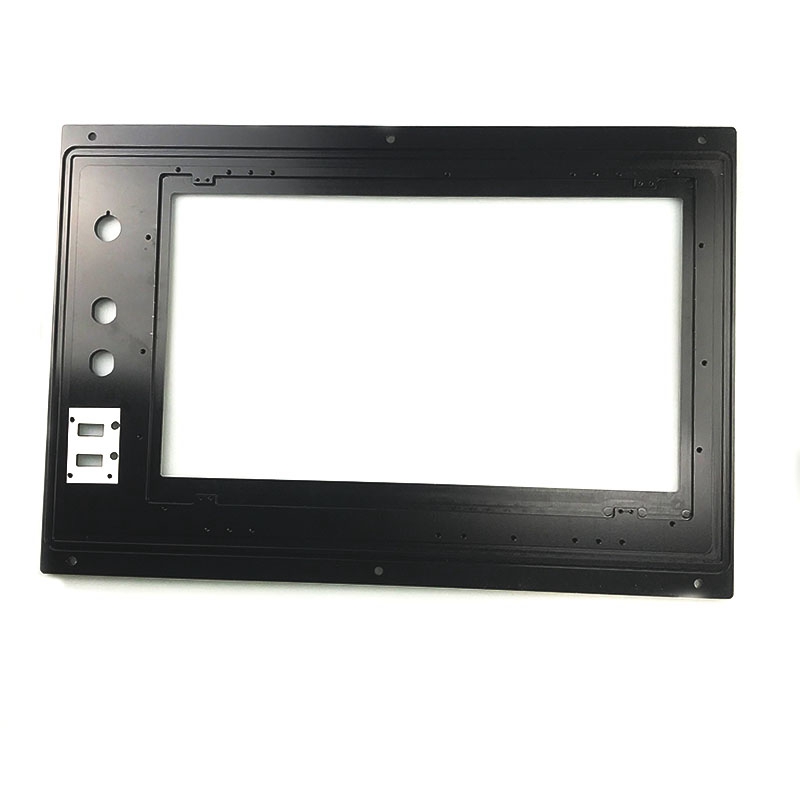
Rapid Prototyping vs Traditional Machining: What Engineers Need to Know
Introduction
As hardware development cycles accelerate, the choice between rapid prototyping and traditional machining has become a key consideration for engineers. Understanding the benefits, limitations, and use cases for both methods—especially with modern cnc machining service capabilities—is critical for making informed development decisions. This article compares both approaches through the lens of precision cnc machining, material selection, geometric complexity, and production speed.
1. Speed and Iteration: Rapid Prototyping’s Advantage
Rapid prototyping is engineered for fast turnaround and iterative testing. Using a cnc machining service, engineers can quickly convert CAD files into physical models. This allows teams to experiment with multiple design iterations in short order, reducing overall development time.
By leveraging precision cnc machining, each version maintains dimensional accuracy, making it possible to validate mechanical fit and function with confidence. Such speed and repeatability are difficult to achieve with traditional machining, where manual setup and tooling changes increase cycle time.
This efficiency is supported by robust cnc machining service workflows designed for consistent performance across prototypes.
2. Material Choices: Flexibility with CNC Machining
Material versatility is a significant benefit of rapid prototyping. Aluminum cnc machining enables the production of lightweight yet strong test parts, widely used for mechanical evaluation and assembly. When required, custom metal parts in steel, brass, or titanium can also be machined to precise specifications.
Creating an aluminum prototype provides insights into real-world performance, thermal behavior, and assembly characteristics. The ability to deliver custom metal parts at low quantities further supports early validation before larger production runs.
When comparing approaches, aluminum cnc machining and the manufacture of other custom metal parts ensure engineers have flexibility for both prototype and traditional workflows.
3. Complexity and Geometric Freedom
Rapid prototyping thrives in scenarios where parts have complex shapes, undercuts, or multiple angled features. 5-axis cnc machining is ideal for manufacturing such geometries efficiently, often in a single setup.
The combination of precision cnc machining and 5-axis technology enables engineers to produce highly accurate test pieces that closely represent production intent. This is far more efficient than traditional machining, where multi-step fixturing and manual intervention can limit achievable complexity.
4. Tolerance and Functional Testing
For both approaches, achieving tight tolerance is fundamental for proper assembly and function. With precision cnc machining, the tolerances required for advanced testing and integration are routinely met. For example, machining aluminum parts to a specified tolerance ensures real-world usability in test assemblies.
5. From Prototype Manufacturing to Full Production
Rapid prototyping bridges the gap between concept and mass production. Early-stage prototype manufacturing—including the creation of a cnc prototype—uncovers design issues, supports functional verification, and provides confidence before scaling.
Ongoing design changes and improvements are supported by custom cnc machining, which allows iterative production of prototypes with fast turnaround and consistent quality.
Conclusion
Engineers need to weigh the benefits of rapid prototyping—including speed, flexibility, and geometric freedom—against the established reliability of traditional machining. Leveraging a cnc machining service with advanced capabilities like precision cnc machining, aluminum cnc machining, and 5-axis cnc machining enables the production of accurate, functional prototypes and helps inform key design decisions before large-scale manufacturing.
READ MORE: