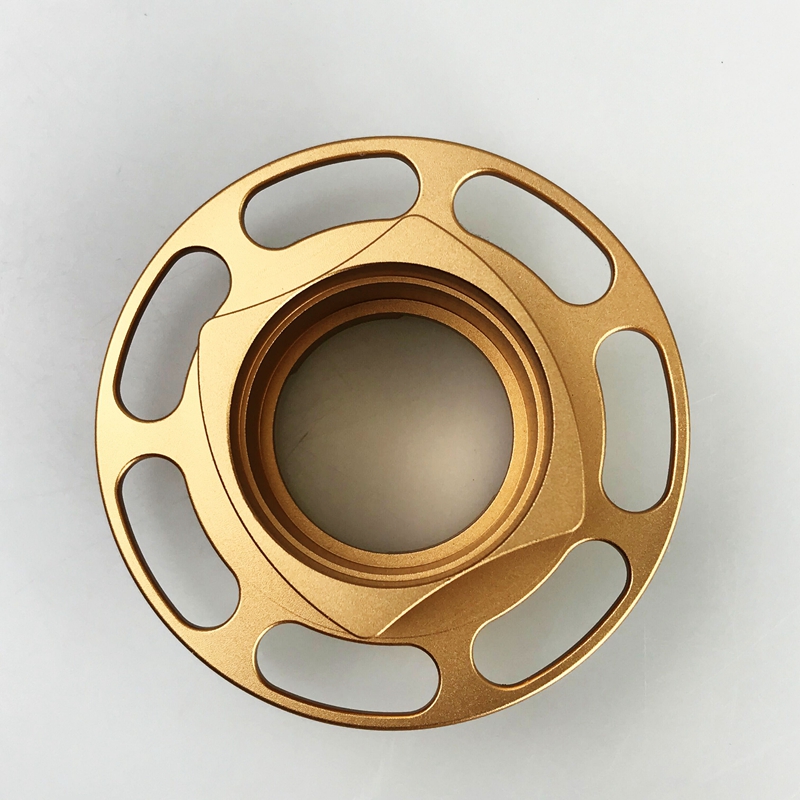
Why Rapid Prototyping Is Critical in Early-Stage Hardware Development
Introduction
Rapid prototyping is essential during early-stage hardware development because it allows engineers to validate concepts, evaluate manufacturability, and reduce product risks before mass production. Through rapid prototyping and precision cnc machining, teams can shorten development cycles and gain reliable mechanical data early in the process.
1. Fast Iteration Enabled by CNC Machining Service
During the initial design stages, rapid prototyping is crucial for transforming digital models into physical objects quickly. By leveraging a cnc machining service, engineers can test and modify their designs without long lead times. The ability to rapidly create functional prototypes supports continuous design iteration, helping teams refine geometry and assembly fit before any tooling investment.
Rapid prototyping minimizes delays and supports iterative testing. With access to precision cnc machining, dimensional accuracy is achieved, and early prototypes can be evaluated under realistic mechanical stresses. This process is especially useful for identifying design flaws and ensuring that all features meet project requirements.
This level of fast iteration is supported by reliable cnc machining service workflows that maintain consistency across every build.
2. Material Flexibility: Aluminum CNC Machining and Custom Metal Parts
Material selection is a key consideration in hardware development. Aluminum cnc machining offers fast turnaround and high machinability, making it a top choice for rapid prototyping. When prototypes require enhanced strength or specific material properties, engineers often specify custom metal parts for more accurate testing.
Creating an aluminum prototype provides valuable feedback on structural integrity, heat dissipation, and compatibility with other components. The ability to manufacture custom metal parts at low volumes means that even specialized alloys can be evaluated in early-stage assemblies.
When evaluating different alloys, aluminum cnc machining and other custom metal parts allow engineers to simulate production conditions accurately.
3. Using 5-Axis CNC Machining to Validate Complex Geometries
Complex designs often include undercuts, multi-angled surfaces, or intricate internal features. 5-axis cnc machining enables the production of these challenging geometries in a single setup, which increases speed and precision during rapid prototyping. Early validation using 5-axis machining ensures that even the most complex prototypes reflect production-quality results.
The combination of precision cnc machining and 5-axis milling provides a stable foundation for validating even the most demanding geometries.
4. Tight Tolerance Control for Functional Testing
For projects involving machining aluminum parts, dimensional stability is especially important during tolerance verification.
Hardware development relies on prototypes that represent production standards. Tight tolerance control is a key requirement for ensuring functional fit, assembly, and part interaction. Through precision cnc machining and effective cnc machining service, engineers can specify and achieve exact tolerances necessary for testing.
Machining aluminum parts with tight tolerances confirms whether the design meets its intended function before large-scale manufacturing begins. This process minimizes downstream changes and supports reliable prototype manufacturing decisions.
5. How Rapid Prototyping Supports Prototype Manufacturing Decisions
Rapid prototyping helps engineering teams bridge the gap between design and production by providing early, physical feedback on manufacturability. The use of prototype manufacturing techniques—such as cnc prototype creation—enables comprehensive testing and optimization. Iterative refinement using custom cnc machining allows the evaluation of both design feasibility and manufacturing logic.
Conclusion
Rapid prototyping gives hardware teams the speed, precision, and manufacturability insights required to advance from concept to validation efficiently. Using cnc machining service and custom metal parts early in the process ensures that designs can be tested in real production conditions before scaling. Leveraging aluminum cnc machining, precision cnc machining, and advanced processes like 5-axis cnc machining helps teams control tight tolerances and make informed prototype manufacturing decisions.
READ MORE: