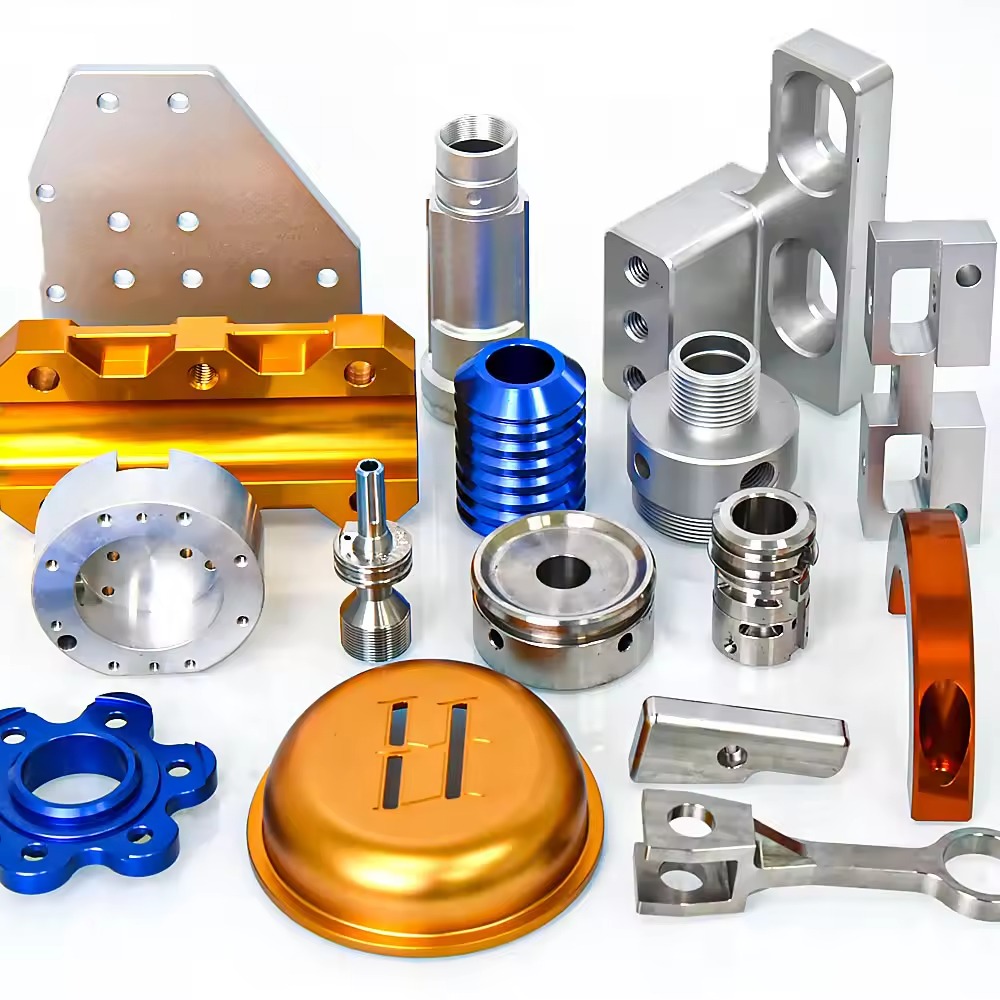
What Defines “Precision” in CNC Machining? A Practical Guide
Introduction — What does “precision” really mean in CNC machining?
In the world of modern manufacturing, “precision” isn’t just a buzzword—it’s the cornerstone of successful parts production. In CNC operations, precision cnc machining, rapid prototyping, and a reliable cnc machining service enable repeatable and consistent results. Core elements like dimensional consistency, repeatability, surface quality, and tolerance all work together to define true precision in every part produced.
Precision Factor #1 — Geometric Precision (Size, Form, Toolpath)
Precision is fundamentally linked to the geometry of machined components. The consistency of machining aluminum parts comes down to the control of size, shape, and toolpath. Sources of geometric error—such as tool wear, material flexibility, and thermal drift—can all impact the accuracy. By leveraging precision cnc machining for your aluminum prototype projects, you mitigate the risks of shape distortion and enable better control over all dimensions.
Precision Factor #2 — Material Behavior and Machinability
The properties of materials used in CNC—such as aluminum cnc machining—directly influence the stability of each operation. Hardness, thermal conductivity, and elasticity dictate how a cnc prototype is made and finished. Custom metal parts require tailored strategies that account for both machinability and the effects of material behavior on precision. For more demanding applications, custom metal parts must meet strict machinability and dimensional stability requirements to maintain precision.
Precision Factor #3 — Machining Complex Structures
Complex features demand more than just traditional strategies. 5-axis cnc machining unlocks advanced possibilities for intricate designs. With custom cnc machining and rapid prototyping, engineers can minimize clamping errors, improve alignment, and achieve greater accuracy on challenging, multi-directional parts.
Precision Factor #4 — Tolerance, Measurement, and Assembly Consistency
Holding a tight tolerance is only half the story. The other half lies in measurement strategies, gauges, and advanced inspection tools such as CMMs. Reliable cnc machining service and well-designed custom metal parts depend on a holistic view—ensuring tolerances, test routines, and assembly checks are all consistent and validated for real-world function.
Conclusion — Integrating All Precision Factors for Truly Accurate CNC Machining
Ultimately, achieving true precision is about synthesis. Combining rapid prototyping, precision cnc machining, and expert aluminum cnc machining results in optimized, validated processes—supported by robust cnc machining service and innovative prototype manufacturing. This is the path from theoretical accuracy to real-world performance.
READ MORE: